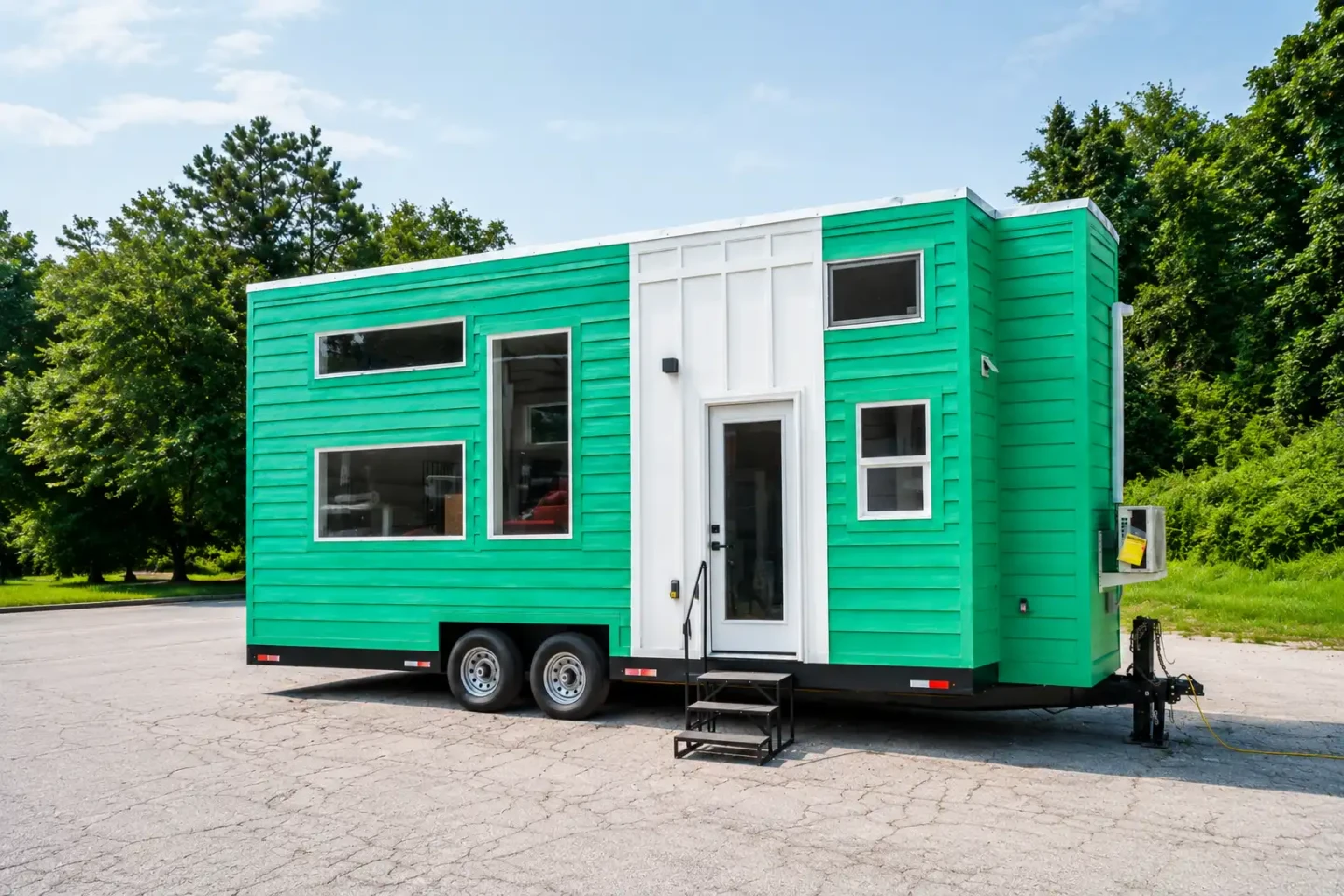
There's a quiet audacity in tweaking a floor plan instead of blowing it up, and Dragon Tiny Homes deserves a nod for that. The updated Vista keeps the compact frame we already know, but it reworks the interior so this thing can actually handle the grind of full-time living, not just weekend novelty. That's the razor clam here, the detail everyone scrolls past: the difference between a house that's tiny and a tiny house that's a home. It's not about squeezing more square footage out of thin air; it's about making the space work harder, and that's a far more interesting story than any render of a skylight.
We're used to seeing this firm push boundaries in other directions, like the Acadia mocks the word tiny with two baths and a single-floor sprawl, which basically laughs at the word tiny. The Vista, by contrast, is doubling down on restraint, and that's a deliberate philosophical choice. It's also a smart one, because the real test isn't whether you can stand up inside; it's whether you can live there on a rainy Tuesday in February without tripping over your own laundry. The tweak to the layout suggests Dragon is listening to the people who actually inhabit these things, not just the ones who photograph them for Instagram. That's the same instinct that makes a tool like the The Blackjaw is a multitool that skips the pliers and trusts its own kit so compelling: it's not about adding more, it's about making what's there genuinely useful.
But here's where Spoot starts squinting a little. The article tells us the Vista is "more suitable" for full-time living, and that's a phrase that does a lot of heavy lifting. What does that actually mean in practice? Does the new layout give you a proper place to put your boots, or does it just shuffle the same compromises into a different corner? We're not given specs, prices, or a shipping date, and that's fine, but it does mean we're judging this one on faith and a few carefully chosen images. The honest take is that a tiny house for full-time living is a promise, and promises are easy to make in a brochure. The question is whether the execution matches the intention, and we can't fully verify that from here. We're not going to invent a square footage or a ceiling height that isn't in the source, and we're not going to pretend we've walked through it. What we can say is that the intent is right, and that intent matters.
The practical consequence for you, the one who's already got a tab open on this, is that the Vista is now a more serious contender for your shortlist. It's no longer just a clever weekend shack; it's a genuine attempt at a primary residence. Watch the details, though. The next time Dragon releases a video, don't watch the countertops. Watch the corners, the transition between the loft ladder and the kitchen, the place where you'll actually stand to make coffee. That's where a tiny house either earns its keep or reveals that it's still just a pretty render with a good story. And if you're wondering whether it's worth the wait, just remember: the best tool is the one you don't have to think about, and the best tiny house is the one that makes you forget you're in a tiny house. That's the bar. That's always been the bar.